
Real Change
Moving Beyond Habits to Achieve Lasting Transformation
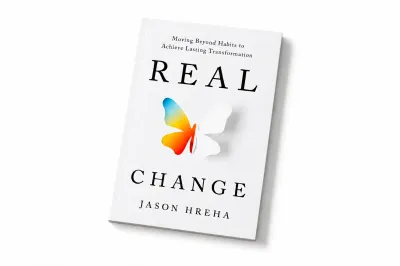
Your biggest goals need more than better habits. Real Change shows you how to choose practices that fit your life—and keep doing the work without waiting for it to become automatic.
A habit can’t do the thinking for you.
You can make sitting down to write a habit. Creating something worth reading still takes thought. The same goes for learning a difficult skill or building a business: new problems call for new decisions.
That’s the mistake Real Change challenges. If you expect repetition to make the whole activity mindless and automatic, you’re asking habits to do a job they can’t do. Another streak, reminder, or morning routine won’t remove the need for judgment.
Habits
Familiar responses that can happen with little thought, like washing your hands after using the bathroom. Habits can also help you start a more demanding activity.
Practices
Deliberate activities you return to because they serve a goal. Writing a novel means deciding what happens next. Learning a skill means working through what you don’t yet understand. Familiar parts can become easier; the new challenges still need your attention.
Effort is not proof that you’ve failed to form a habit. You may be trying to build a practice. The question then becomes: what activity is worth that effort, and how can you make room for it in your life?
The research behind the distinction
Habit researchers distinguish starting an activity automatically from carrying it out automatically. A complex activity can involve habitual parts and still require deliberate thought. This supports a distinction between starting and doing; it does not mean habits are useless.
Gardner, Phillips & Judah: habitual instigation and execution
Phillips & Gardner: starting and carrying out exercise
Jason uses “practices” for the demanding activities that habit advice alone cannot account for. For a fuller discussion, read the behavior-change guide.
Choose the behavior before you commit to it.
In the book, Jason describes writing a daily newsletter and waiting for the work to become easier. It didn’t. Finding new ideas still required thought and effort.
Then he reconsidered the goal. Daily writing was one possible route to building a business around his behavioral science background. Product development interested him more. Changing the activity gave him a different way to pursue the same aim.
The work remained demanding. But it was work he wanted to do.
Four stages in the book
Energy optimization. Consider whether you have the energy to change established routines and take on demanding activities.
Habit disruption. Identify habits that no longer serve your goals and interrupt the patterns that keep them in place.
Habit trading. Find a better response to the recurring need an unwanted habit was meeting.
Practices. Choose deliberate activities that help you pursue your larger goals and that you can keep returning to.
Put the ideas into practice
Companion worksheets
Put your goals and possible behaviors on paper. Read the instructions online or open a printable PDF. All 11 worksheets are free to use.
The original book and worksheets use “Transformative Practices.” We use the simpler term “practices” here; the existing worksheets cover the same exercises.
Habit trading
Replace a habit that no longer serves you. Start by understanding what it does for you, then consider better ways to meet that need.
Identifying Bad Habits
Identify the habits you want to replace and choose where to start.
Choosing a Goal
Explain what you want each habit change to accomplish.
Brainstorming New Habits
List possible replacements that fit your goals and preferences.
Ranking New Habits
Compare options for excitement, ease, enjoyment, and effectiveness.
Disrupting Your Bad Habits
Identify the cues behind an unwanted habit and plan how to interrupt them.
Tracking Your Habit Trade
Record the old and new habits, then review how the change is going.
Practices
Start with your goal, then consider your interests, skills, and circumstances. Use these exercises to compare activities that could help you reach it.
Clarifying Your Goal
Explore your goals and choose the one you want to pursue.
Assessing Yourself
Consider your skills, personality, circumstances, and available resources.
Brainstorming Practices
Generate several activities that could help you reach your goal.
Ranking Practices
Compare practices for excitement, ease, enjoyment, and effectiveness.
My Practices List
Keep a list of the practices you choose and update it as you try them.
Move beyond habit advice.
Choose work worth returning to. Make room for it in your life. That’s what Real Change is about.
Read Real Change Available on Amazon