What is Associative learning?
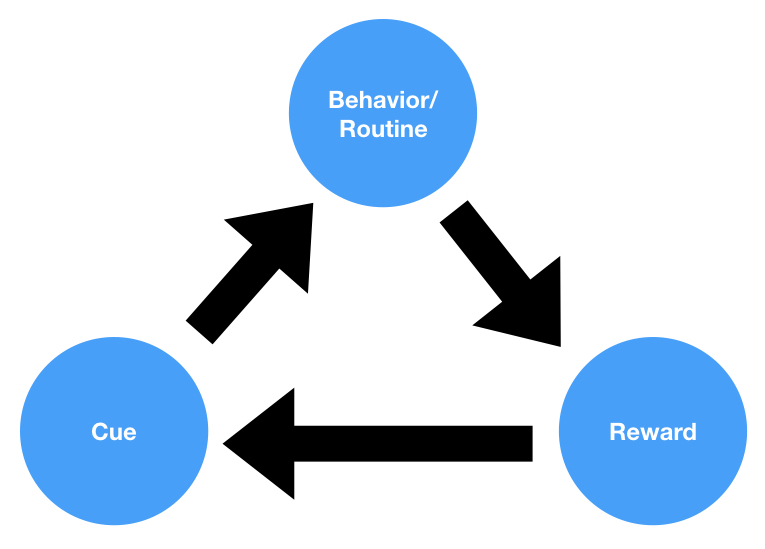
Associative learning is the process by which organisms learn to connect stimuli, behaviors, and outcomes through repeated experience. It encompasses both classical conditioning (Pavlov’s dog learning that a bell predicts food) and operant conditioning (learning that pressing a lever produces a reward).
How it works
In classical conditioning, a neutral stimulus becomes associated with an unconditioned stimulus through repeated pairing until it triggers the response on its own. In operant conditioning, behaviors are strengthened or weakened by their consequences. Both forms operate largely outside conscious awareness and form the foundation of habit formation. The principles explain why environmental cues trigger cravings, why rewards shape behavior, and why punishment is less effective than reinforcement for lasting change.
Applied example
A person who always has coffee while checking email may eventually find that opening their email triggers a coffee craving, even if they are not thirsty. The repeated pairing has created an automatic association between the two activities.
Why it matters
Associative learning is the fundamental mechanism underlying habit formation, cue-triggered behavior, and most behavior change techniques that involve pairing actions with rewards or restructuring environmental cues.