What is Habit?
A habit is a behavior that has become automatic through repetition, requiring little or no conscious deliberation. Habits are triggered by contextual cues rather than intentions, which is why they persist even when a person’s goals change.
How it works
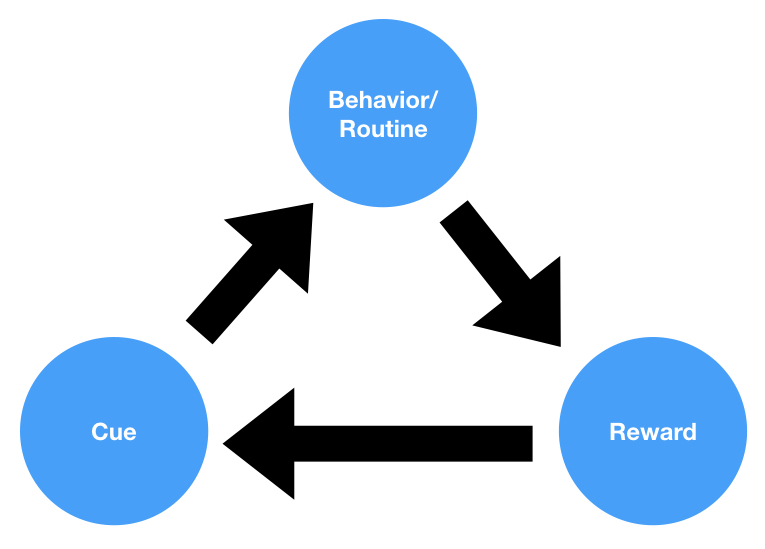
Habit formation follows a cue-routine-reward loop. A cue (like arriving home from work) triggers a routine (opening the fridge) that delivers a reward (a snack). Over time, the link between cue and routine becomes so strong that the behavior fires automatically, bypassing conscious decision-making. Wendy Wood’s research shows that roughly 43% of daily actions are habitual.
Applied example
A commuter who always takes the same route to work will continue driving that way even after moving to a new office, sometimes arriving at the old workplace by mistake, because the cue (getting in the car) triggers the old routine.
Why it matters
Because habits operate outside conscious awareness, changing them requires disrupting the cue-routine link rather than relying on motivation alone, which is why environment design is more effective than willpower for behavior change.